Showing posts with label Club Las Tanunas. Show all posts

Sunday, October 30, 2016

A Big Step Toward Establishing Sister Birding Clubs Between the U.S. and Honduras


               A couple months ago, I had a small dream of trying to link my local bird club in Ithaca, NY (the Cayuga Bird Club) with a club or two in Honduras based on the idea that we share an interest in some of the same birds.  From about May through September, those of us in the Ithaca area enjoy a large diversity of warblers, vireos, flycatchers, cardinal-tanagers, and other Neotropical migrants which breed in North America.  The rest of the year, those migrants travel to, and winter in, areas much farther south.  Honduras is the winter destination for many of those migrants, and many others pass through Honduras on their way even further south for the winter.
Rose-breasted Grosbeaks on just one of dozens of species of
Neotropical migratory birds that link birders in North and
Central America.  Photo Credit: Gary Tyson.


               I already had planned to travel to Honduras to participate in the Honduras Birding for Conservation Tour in early November when I had that dream.  I was very fortunate to have an opportunity to travel to Honduras even earlier – in mid-October – to meet with bird clubs, and to experience an immersion into the birding culture of Honduras prior to participating in the Conservation Tour.  The dream I imagined was small and simple.  Little did I know what amazing reality was possible!

               This week, we took a huge step in bringing that dream to reality!  On Friday and Saturday, I was in the western Honduras town of Gracias to meet with members of Club Las Tanunas (the Lesser Roadrunners) and a school-based group called Club Hummingbirds.  Members of these clubs invited me to go birding with them, to share meals and drinks, to see a slide presentation about their clubs and what they do, and to experience a club meeting at which we discussed the sister birding club idea.  Now, 24 hours later, I am still amazed at what happened in that meeting. 
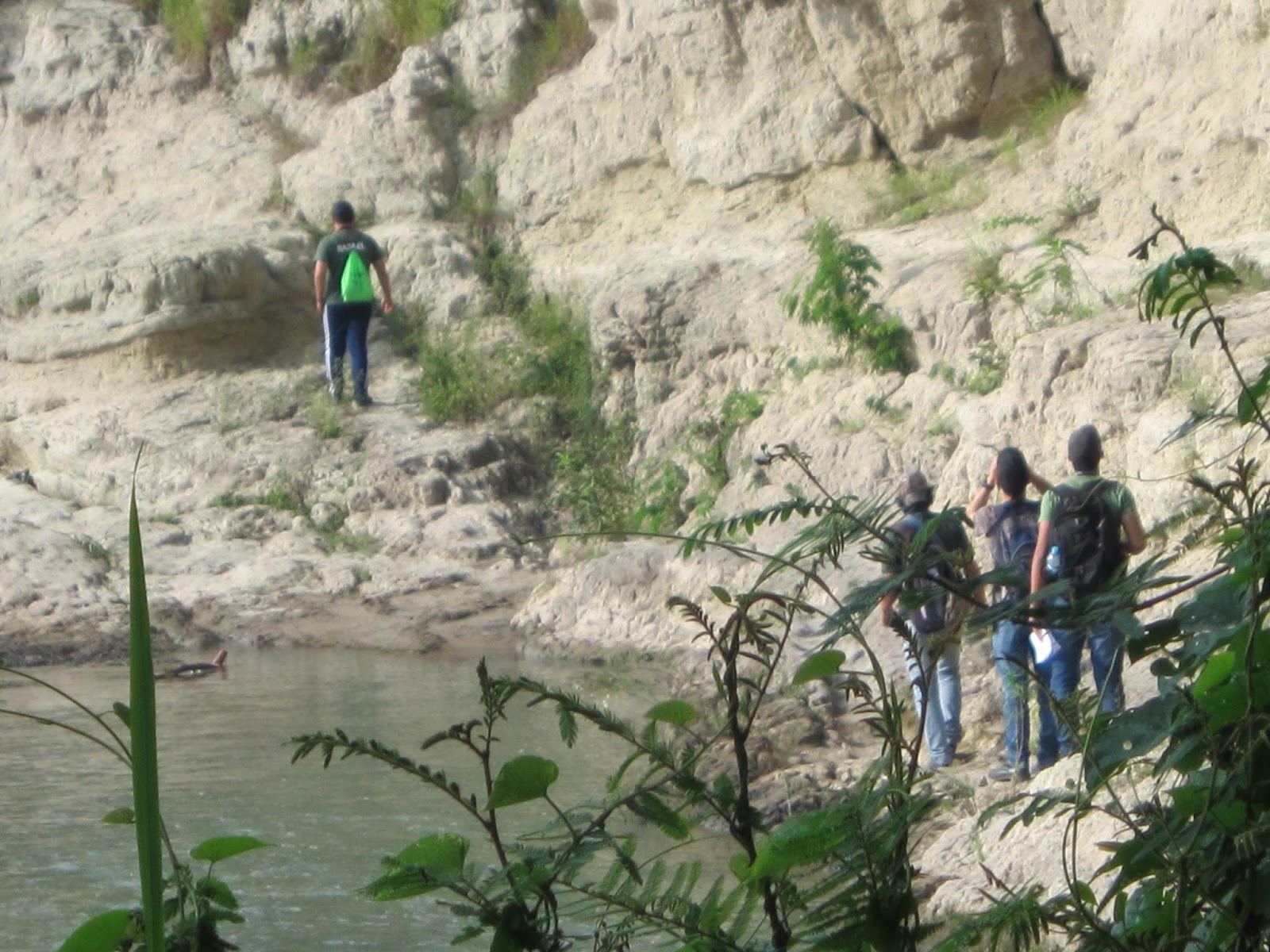
I attended an early morning field trip along the beautiful
Rio Grande on the outskirts of Gracias, Honduras with
members of Club Las Tanunas and Club Hummingbirds.
Photo credit: Jody Enck.
Post field trip coffee and breakfast with Club Las Tanunas and Club Hummingbirds.
Photo credit: Jody Enck.

               Members of Las Tanunas and the Hummingbirds (which were voted in as full members of Las Tanunas at that meeting!) expressed a great desire to be a sister birding club with the Cayuga Bird Club as a first step in developing a network of sister birding clubs between North and Central America!

               What might this relationship look like?  I asked the birders here what they thought a sister birding club relationship might entail, what Cayuga Bird Club members might learn from them, and what tangible benefits they would want from a relationship. Among a lot of ideas, these priorities emerged as desired outcomes for Club Las Tanunas:

·        Help promote Honduras as a safe and wonderful place for North Americans to come for birding.  They perceive that most North American birders either don’t think of Honduras as a birding destination or only see travel alerts from the State Department suggesting that Honduras is dangerous.

·        Help provide birding equipment, not for Club members,
Club Las Tanunas members engage school kids in bird and bird
conservation programming.  Photo credit: Club Las Tanunas.
but for Club members to use to engage other community members (e.g., school groups, the general public in the community, and visitors) in bird appreciation.
  Some of the other Clubs in the country have almost no equipment of their own (e.g., binoculars or field guides).  Las Tanunas is fortunate to be different in that they do have some personal or Club equipment.  And, they already put on school programs and bird-related workshops.  Additional binoculars and field guides could go a long way in facilitating the great community-based work they are doing in the Gracias area.

·        Help promote the Gracias area as a birding destination.  Despite its proximity to Celaque National Park (the highest peak in the country) and the occurrence of hard-to-find birds (like Honduran Emerald and Ocellated Quail), Gracias is not very near other, more well-known birding locations in Honduras.  None of the major eco-tourism lodges are located here, and externally-led tour groups generally don’t come here. 

·        Establish a sense of connection about what each sister club is doing on a regular basis.  For example, sister clubs could write a short column in the other club’s newsletter about what they’ve been up to in recent weeks.  We could share archived copies of club presentations, facebook posts, bird pictures and videos, and basic descriptions of what we are seeing (or not seeing) in the way of Neotropical migrant birds.

·        Our clubs also could write letters to the Mayors, Chambers of Commerce, or Tourism Bureaus in the city of the sister birding club to let them know that their local birding club is connected to another club along the Hemispheric Flyway of Neotropical migratory birds.  How much do the residents of Ithaca and Tompkins County in NY know about the Cayuga Bird Club, what we do, and why birds and bird conservation is so important to us?  Wouldn’t a letter from a sister bird club in Honduras give our Club some cache in Ithaca?

·        A delegation from the Cayuga Bird Club could travel to Gracias when they hold their own Birding Blitz next year.


Not surprisingly, members of Las Tanunas and the Cayuga Bird Club share a lot of experiences and attitudes about Neotropical migratory birds.  They told me that they get a little bored in the summer when the Neotropical migrants are breeding up in our part of the hemisphere.  Then, when the migrants return in the fall, it is more exciting again to go birding.  Just like we in Ithaca look forward to migration in the spring, birders here look forward to migration in the fall.   

Many of the club members I talked to try to go birding every day.  They were very happy to show me some of their favorite, near-by birding spots.  Late one afternoon, I went on a bird walk along the river in town with four members of Club Las Tanunas.  It was really fun as their English vocabulary mostly pertained to body parts of birds, and my Spanish vocabulary pertains mostly to ordering food in restaurants.  Nonetheless, we spoke the universal language of birders everywhere.  We pointed out birds to each other, identified them, got excited when we spotted five Wood Storks flying over (the only ones I’ve seen so far in Honduras), and we shared in the awe of seeing fascinating feathered creatures that link us in so many ways.

Members of Las Tanunas differ from the Cayuga Bird Club in some notable ways, however.  Most of Las Tanunas are young males.  They admit to being fairly competitive with each other, but not necessarily with birders outside of the club.  Most of these guys are not college educated, are either low-wage workers or are in between jobs.  Some of the other clubs are associated with colleges or larger towns, and members of those clubs typically have college degrees and somewhat higher paying jobs.  What Las Tanunas may lack in terms of material or financial resources, they more than make up for in terms of their camaraderie, birding excitement and expertise, and dedication to helping local community members better understand birds and threats to bird conservation. 
Luis Fajardo of Club Las Tanunas showing me his club t-shirt.
Photo credit: Jody Enck.

One of the things I enjoyed about my late afternoon walk with the four club members was how much their identity as birders was both central to their lives, and, also so well-accepted as normal by their friends in the community.  On our walk, we passed many of their friends – young men, often with longer hair and tattoos – who they greeted heartily with fist-bumps, hand-clasps, and bear hugs.  These non-birders sometimes asked, “are you looking for birds,” but this was almost more of a statement of fact, rather than a question.  Las Tanunas did not hide or camouflage their identity as birders, they just went about their lives as birders and their relatively macho friends (remember this is a macho, male-dominated society) accepted their identities as birders without batting an eyelash.

During our meeting on Saturday morning, one of their members (and adult mentor of Club Hummingbirds), Francisco Rovelo, translated for me.  Club president, Carlos Caballero, started out with a welcome and a statement of appreciation for all that ASHO has done to support the development and sustainability of their club (e.g., help developing their strategic plan, and help writing to other community institutions about the benefits Las Tanunas can bring to Gracias.   Carlos then shared a brief power point presentation about their club, it’s history, and what it strives to do (Cayuga Bird Club members – we should do this for our Club!). 
President of Club Las Tanunas, Carlos Caballero, presenting
information about the club.  Photo credit: Jody Enck.

I then had the opportunity to talk about the Cayuga Bird Club, and about this dream of establishing sister birding clubs between the U.S. and Honduras.  I didn’t need Francisco’s interpretation to sense how important and meaningful my visit was to Las Tanunas.  The importance of having somebody from outside of Honduras come and want to learn about their club and to experience what it means to be a bird club member from their point of view was really evident.  (I subsequently learned that this excitement and deep appreciation was continued among members of Las Tanunas on their Club Facebook page). 

By the end of this meeting, I was overwhelmed with positive emotions.  I felt appreciated and honored as a guest of Las Tanunas.  I also was filled with awe and appreciation for their dedication to birds, bird conservation, and to each other as birders.  We all shared in a deep desire to be part of something much bigger than just ourselves or our own clubs.  We want to be connected to this bigger group of people across the hemisphere, linked by the birds we all love so much.
Participants in our meeting about sister birding clubs included members of Club
Las Tanunas, members of Club Hummingbirds, Frony Miedema (far left) who is
owner of the Guancascos Hotel and Restaurant, ASHO board member William Orellana
(7th from right), and me (6th from right).  Photo credit: Guancascos Hotel and Restaurant.

Sharing this story on this blog or in presentations when I go back home cannot possible get across the rich and meaningful experiences I have had here.  I definitely want to come back to Honduras, and to bring others here to have these same kinds of experiences.  I feel more energized as a birder than I have felt in a very long time!


Birding with a different kind of Ambassador


               Which people or groups might be called the Ambassadors for birding In Honduras?  There are a number of candidates from among the entities that make up the birding culture in the country. 

Here in Honduras, the Birding Culture is a fascinating mix, not only of individual birders, but also of organizations that are related to birding in some way.  One of the main institutions in the country is the Honduran Ornithological Association (AHSO).  I wrote a bit about ASHO in an earlier post.  
ASHO is the umbrella institution supporting
bird clubs and bird monitoring in Honduras.
Photo credit: Jody Enck
This institution is an umbrella organization for all the bird clubs in Honduras, and it pays particular attention to ensuring that all the clubs have strategic plans, and that birders in clubs strive to maintain the highest levels of integrity when it comes to identification and reporting of birds.  Along these lines, I think it is fair to say that ASHO reflects the scientific and academic research aspects of birding in Honduras.

If you’ve been paying attention to this blog, you know there are about seven or eight birding clubs in the country.  I just spent the last two days in Gracias meeting with Las Tanunas (Lesser Roadrunners) and a school-based group of teens called the Hummingbirds.  I’ll write more about that incredible visit soon.  These clubs and their members are the backbone of the local birding culture.  They draw their members from the local
Members of Club Cotinga giving a presentation about 
recent birding activities.  Photo credit: Club Cotinga
community, provide outreach to schools and other local organizations, and bring awareness of birds and threats to bird habitat to others in their communities.
  Some club members act as bird guides for local residents of Hondurans on vacation to a different part of the country.  They also have established eBird hotspots at great birding locations.  Despite these clubs being the backbone of the birding culture in Honduras, it is possible that visiting birders might never come in contact with the clubs because their existence is not widely known outside of the country.

Another important institution that is part of the birding culture is the network of eco-tourism lodges in the country, and the local bird guides associated with those lodges.  There are some fantastic lodges here where one can stay and be led on great bird hikes.  These include, but are not limited to, Pico Bonito and Rio Santiago on the north coast, Panacam lodge near Lake Yojoa, and Hotel Marina Copan in the west near the Copan Ruinas. 
Pico Bonito Lodge is just one of the splendid eco-tourism
lodges birders can encounter when exploring the birding
culture of Honduras.  Photo Credit: Pico Bonito Lodge.
These lodges and their guides are not part of ASHO, and usually are not formally linked to any of the clubs.  Certainly, though, visiting birders often have direct contact with this institutional aspect of the Honduran birding culture.

There also are a small number of independent guides who are not associated with any of the eco-lodges.  One if Robert Gallardo, who produced a Field Guide to the Birds of Honduras in 2014).  In addition to leading tours, Robert also puts on both bird identification workshops as well as beginner and advanced tour guide training. 

William Orellana and Katinka Domen, of Beaks and Peaks Birding and Adventure Tours, also operate independently from any eco-lodges.  I wrote in one of my first posts from Honduras about William’s vision for Beaks and Peaks.  Now, 18 days into my Honduran odyssey, I have a much better appreciation of just how important these visionaries are to the birding culture in the country. 

 William is a native Honduran who grew up in the small, colonial-era city (it’s church was constructed in 1611) of Gracias in Lempira Department.  He took me there on Friday and Saturday of this week to meet some of the local residents, to see how birds are woven into the fabric of local livelihoods, and to meet with Las Tanunas and the Hummingbirds.  I got to spend some time with Katinka a little earlier on my travels here in Honduras, including during the Lake Yojoa Birding Blitz and on my quick trip to the north coast (blog post here).  After these all these experiences, I think William and Katinka deserve to be considered two of the important Ambassadors for Birding in Honduras.  Below are a few vignettes to show why.

Vignette 1.  Breakfast at Reserva Natural Privada el Consejero near the city of La Esperanza in Intibuca Department.
Beaks and Peaks helped a local landowner realize his dream
of establishing a nature reserve where visitors can come
and have an authentic Honduran nature experience.
Photo credit: Jody Enck.

 Julio is a landowning environmentalist in an area where environmentalists are few and far between.  His small reserve protects a relatively intact patch of high elevation pine forest.  He has a love of birds and other things in nature (he is an expert in mushrooms!).  William and Katinka found out that Julio was interested in birds and wanted to start a hummingbird garden on his property.  Starting in September of 2016, Beaks and Peaks invested time, labor, money, and goodwill in helping Julio establish the first bird-feeding garden in western Honduras.  This garden includes about a dozen hummingbird feeders and a number of native plants that flower in late winter when hummingbirds are looking for plant nectar. 
Julio and me having coffee in the hummingbird garden.  La
Esperanza is the highest-elevation city in Honduras.  It was
quite chilly when we visited although not cold enough to snow
like it did back in Ithaca, NY the previous night. 
Photo credit: William Orellana.


Within just a few days of the feeders being hung up, hummingbirds began using them.  In fact, the first species to take advantage of feeders was a migrant Ruby-throated Hummingbird from North America.  Now, 8 species of hummingbird have been recorded among the 68 total species observed there.  When we stopped to visit and have breakfast with Julio and his family, we saw Mexican Violetear, White-eared Hummingbird, and Azure-crowned Hummingbird, and Magnificent Hummingbird.    After the birds started coming, William and Katinka helped get the word out among members of the birding community that this was a place to see some great birds.  They helped create an eBird hotspot for the site, and they started bringing guest there on Beaks and Peaks tours.
William Orellana of Beaks and Peaks
enjoying an outdoor breakfast prepared
in Julio's home in the background.
Photo credit: Jody Enck.
      A group of birders from the Missouri Audubon Society was so impressed with their recent visit and Julio's hospitality that they are working with him and Beaks and Peaks to obtain a grant so that Julio can build a larger kitchen to offer breakfast to larger groups than he now can handle.  If you ever find yourself on the Central American highway 11-A west of La Esperanza, be sure to stop in and visit this private reserve.
Julio lost several acres of pine trees to an infestation of
pine bark beetle.  He is using some of the wood to build a
new home.  He sold some other timber, and is using that
money to dig a new well.  Photo credit: Jody Enck.
  

Vignette 2.  Visiting the shop of local artist Jose Adelberto Ayala (“Beto”) in Gracias.

               William and I took a little tour of Gracias after our arrival.  Because William grew up in Gracias and visits regularly, he knows many of the people here.  One of the residents we ran into was Beto, who invited us to see his artist shop.  William often talks with Beto about his artwork and about birds.  Beto says that he

"Beto" and me in his artist shop.  He incorporates birds
into his artwork for the non-birding public -- the
"normal people" of gracias.  Photo credit: William Orellana.
may not go birding, but he can bring birds into the lives of non-birders (“normal people”) by painting realistic bird portraits on items that residents use in their lives.  Although Beto may have incorporated birds into his artwork anyway, encouragement from William helped empower him to bring his love of birds to the “normal people” of Gracias.


Vignette 3.  Staying at Guancascos Hotel and Restaurant in Gracias.

Established in 1993, Guancascos Hotel and Restaurant sits on a hillside below the San Cristobal fortress, and was the very first hotel in Honduras to receive an international certificate in sustainable tourism.  I stayed there one night and enjoyed fantastic hospitality and great food in the restaurant on a patio overlooking the town.  We also meet there on Saturday morning with Las Tanunas and the Hummingbirds.
One of the incredible bird murals that greet
you when you enter the Guanacascos Hotel
and Restaurant.  Photo credit: Jody Enck.


Owner Frony Miedema caters to people seeking a connection to nature.  The hotel offers things like hikes up into Celaque National Park (the highest peak in Honduras), and various other nature expeditions and cultural tours of the area.  When you enter the premises, you know right away that birders are welcome here.  Right inside the door are photos of local birds taken by William, along with large bird murals on the walls. 

When Beaks and Peaks brings bird tours to Gracias to explore

Some photos taken by William Orellana
of Beaks and Peaks are incorporated into
bird posters at Guancascos Hotel and
Restaurant to highlight how bird- and
birder-friendly the Gracias area is.  Photo
credit: Jody Enck.
Celaque National Park and other nearby birding sites, they stay here.  It’s an example of one birding business collaborating with the broader tourism sector.  It’s about relationship building.  It’s about not only getting people interested in birds or showing people birds, but ensuring that the infrastructure is sustained to meet the needs of birders in Honduras.


Vignette 4.  Empowering women birders in Honduras.

               In my travels within Honduras, I have come to realize that women birders are a minority here.  This differs from at least some populations of birders in the U.S.  For example, women account for about 70% of members and others who use the services of the Cornell Lab of Orni

Katinka Domen (center) of Beaks and Peaks Birding
and Adventure Tours is a role model empowering
female birders in Honduras.  Photo credit: Katinka Domen.
thology in the U.S.  Katinka Domen is the only woman guide in all of Honduras.  It was clear during the Lake Yojoa

Blitz that she is a role model for women birders here.  She also is an inspiration for others I have met on my travels who do not yet belong to a birding club – in part because they are so male dominated – but who are interested in birds and birding.  Katinka’s opportunity to be recognized as a role model for women birders is likely to grow in the future as she has been asked to write an article about being the only female bird guide in Honduras.


Vignette 5.  Closing the loop back to the birding culture – Las Tanunas and the Hummingbirds.

               Las Tanunas is a group of about 15-20, mostly young men who go birding very frequently, get incredibly excited about seeing the great birds in the area, and who reach out to other community members through school programs and inviting their friends to try out birding.  I’ll write more about them and the Hummingbirds soon. 
Birding with Las Tanunas and the Hummingbirds along the Rio Grande
near Gracias, Lempira Department, Honduras.  Photo credit: Jody Enck.
               This is William’s hometown club.  Although he does not live here anymore, he is good friends with many of the club members.  One of the important roles William plays with Tanunas and the Hummingbirds is to help them envision future possibilities of raising public awareness about birds and the need for conservation of birds and their habitats. 

               As a member of the ASHO board, William worked with Tanunas to develop their strategic plan.  He also is working with the club to produce a letter that will go out to other institutions in the community – tourism bureau, municipal government, schools, etc. – letting them know that the bird club exists and can provide a wide range of services and types of information to members of the community about birds and conservation.  It’s about integrating birds and birding into the broader life of the community.  When I met with Las Tanunas and the Hummingbirds to discuss the sister birding club idea (more on that in another post), William also encouraged Las Tanunas to consider just what the relationship was with the school-based Hummingbird group.  After some spirited and passionate discussion, Tanunas voted to consider the Hummingbirds to be full members of Las Tanunas.
Participants in our joint meeting with Club Las Tanunas and Club Hummingbirds
at Guancascos Hotel and Restaurant in Gracias.  Photo credit: Guancascos Hotel and
Restaurant.


               These vignettes provide just a glimpse into ways that William and Katinka envision a broad, integrated, and collaborative birding culture for Honduras that is inclusive, sustainable, and empowering for all the individuals who are part of that culture.  They don't only want to take people on tours or help club members learn how to identify and monitor birds.  They try hard to provide any visitor with a full experience of connections between birds, birders, other local community members. Certainly, everyone who is part of the birding culture in Honduras is in some way a Birding Ambassador.  But it also is clear to me that William and Katinka help grow and sustain the birding culture here in ways that other entities don’t.  I think that also makes them an inspiration to birders everywhere.