Tuesday, November 15, 2016

Honduras Birding for Conservation Tour


               I just finished my trip to Honduras.  I’ve really enjoyed meeting with birders from many of the bird clubs in Honduras, and laying the groundwork for establishing a network of sister birding clubs between the U.S. and Honduras.  To wrap up my trip, I have spent the last nine days participating in the Honduras Birding for Conservation Tour.

               This Tour was the first of its kind in the country.  The main purpose of the Tour was to bring attention to Honduras as a safe, bio-diverse, and exciting place for avitourists to visit.  The hope is that more avitourists coming to enjoy the country will translate into more protection for the birds that avitourists want to experience, and especially for the habitats on which those birds depend.   
Participants in the Honduras Birding for Conservation Tour were welcomed in amazing ways everywhere
we birded on the Tour.  This sign greeted us at te Pico Bonito Lodge on the north coast of Honduras.  
Photo Credit: Jody Enck.


               Five teams of ten birders each competed for nine days to see (and/or hear) as many bird species as possible in designated counting areas.  Each of these teams was led by a dynamic duo composed of an internationally known bird tour leader and a local Honduran bird guide.  Each of the five teams was outfitted with a bus and driver to take us to the counting areas each day, and to transport us to three different geographic areas of the country over the nine days of the Tour.
We chose to call our team "The Ant Swarm" in honor of all the
various bird species that can be found attending ant swarms in the
tropics.  This was the bus for "The Ant Swarm."  Our great driver,
Miguel, made sure we got safely from place to place.
Photo credit: Jody Enck. 
          Our Team was first headquartered at the Pico Bonito Lodge for four days of birding the rainforest and coastal marshes of the north coast.  Then we traveled to the more arid and higher area around the City of Copan (where we stayed at the Hotel Marina Copan) and the Mayan ruins in western Honduras.  Our team wrapped up the Tour by being headquartered for a couple days at Panacam Lodge in Cero Azul Meambar National Park near Lake Yojoa more in the central part of the country. 

               The Tour has been a fun, exhausting, and informative time.  The President of Honduras, Juan Hernandez, has supported this Tour by contributing $20,000 U.S. in prize money to be awarded to in-country conservation projects, facilitating infrastructure improvements for the Tour, ensuring official media coverage, and providing (unnecessary) extra security for participants.  An additional $15,000 U.S.  (approximately) was donated by corporate sponsors.  The funds provided by the President and the sponsors were available to be designated by the competing teams to various conservation programs within the country. 

               I’ll write about our birding experiences in another blog post.  I’ll also write about the in-country conservation programs that received the funds designated by the winning teams.  For now, suffice it to say that the team on which I participated came in third, and was honored to designate $5,000 to a conservation program.  The remainder of this blog post will focus more on some musings about conservation that emerged during my participating in the Tour.

What’s in a name?

               This incredible event was called the Honduras Birding for Conservation Tour.  The website that attracted me to want to participate, various emails, Facebook posts, and discussions with Tour organizers all made important points about conservation.  Media about the event raised awareness about conservation needs and conservation successes in Honduras.  The Tour raised and distributed more than $35,000 U.S. to three different conservation programs.  Many participants said they would return, and bring their friends with them next time.  This will produce additional conservation benefits. 
There was a lot of media coverage throughout the Honduras Birding for Conservation Tour.
Here one of our team members, an expat from the U.K. now living in Bolivia,
is interviewed for Honduras TV while other team members look on.   Photo Credit: Jody Enck.

               These all are important points.  By many measures, the Tour was a huge success for Honduras.  Yet, I still am left pondering about the connections between these points (and many other possible ones) and bird conservation in Honduras.  If you connect some of those points, what does the picture look like?

Connecting the dots.

Just like there are many stars in the night sky, there are many points of light associated with this tour.  Turning those various points into a “Bird Conservation” constellation requires connecting the dots.  But, this does not mean connecting the dots in some
Drawing of Johan Bayer's "Southern Birds" showing some
bird constellations in the southern sky, including Toucana
in the center of the drawing. 
haphazard way.
  Think about all those stars in the night sky.  Recognizing which stars make up specific constellations requires both an understanding of the stories behind the naming of the constellations, and enough imagination to visualize the appropriate connections between stars.

          Understanding and imagination.  Both are important, and neither occur by magic.  Developing understanding and imagination takes focused engagement and transformative experiences.  Here are some examples of what I mean.
          First, this Tour was set up as a fun competition with a goal of seeing as many species as possible.  Many of us (50 birders mostly from the U.S., U.K., and South Africa) did not know very well very many of the birds of Central America.  Because of this, we spent a lot of birding in more open, disturbed habitats where (1) it was
Birding in a corn field planted in the buffer zone of Cero Azul National Park,
Honduras.  Fields like this held good numbers of a diversity of species that  
we recognized, including migratory warblers, orioles, vireos, and flycatchers. 
But, these kinds of habitats lacked any of the habitat-specific birds which  
rely on protected forest areas for survival.  It was ironic to spend most of our 
time birding in areas associated with habitat loss rather than habitat protection. 
Photo credit: Jody Enck.
easier to see birds and get each of our 10 team members to be able to see and recognize birds, and (2) we saw many of relatively common species that are not habitat specific, including lots of Neotropical migratory birds which we were familiar.  I know I loved seeing "my birds of summer" on their wintering grounds in Honduras. 

          Our approach to Tour, however, meant that we focused more on wracking up numbers of species rather than developing an understanding of the special birds associated with the less-disturbed habitats that are most under threat of being lost.  I wonder what it would have been like to focus on visiting natural habitats and trying to identify as many of those species as possible so we could compare the specific list of species and the diversity of species in those areas with birds in the disturbed habitats.
The core area of Santa Barbara National Park is supposed to be protected from firewood cutting and agricultural
production, but more and more habitat is being lost all the time.  Photo credit: Jody Enck. 

               This point was driven home for me this morning when I birded my local patch in Ithaca, NY for the first time in about five weeks.  I conduct an eBird point count in my local woods, and it's always pretty "slim pickins" in terms of diversity and abundance in winter.  The "pickins" are made even slimmer by the fact that most of our "birds of winter" -- Black-capped Chickadees, Northern Cardinals, Tufted Titmice, Black-eyed Juncos, Downy Woodpeckers, etc. -- can be pulled out of the woods to the smorgasbord of backyard feeders that exist in my general vicinity.  My 30-minute point count this morning revealed two American Crows and one Blue Jay.  The resident "birds of winter" sometimes are found in this patch of "natural habitat", but today they were elsewhere -- probably in very disturbed habitats in local backyards.
               In Honduras, many of the resident birds are not likely to be drawn out of their natural habitat to attend feeding stations.  Obviously, a few exceptions exist.  Some of the bigger, charismatic species like Keel-billed Toucan, Collared Aracari, and some of the Motmots certainly will come to feeding stations.  But most of the interior forest birds will be found only in the interior forest.  If you want to encounter them, you have to go to them.  If you want to understand their habitat needs, you have to go where they live.  If you want to imagine what it is like to encounter a mixed-flock of interior forest birds attending an ant swarm, you have to immerse yourself in the interior forest habitats.
          Second, while birding around Honduras, we constantly saw the private homes of everyday Hondurans literally scratching out a living from the landscape.  These hard-working, hospitable people survive on an average of about $300 per month per family.   They live with 3 or more generations of family members in small 3- or
A house on the outskirts of La Ceiba, Honduras.  Can we imagine
the joys and challenges of day-to-day living for most Hondurans? 
Photo credit: Jody Enck. 
4-room homes constructed of cinderblocks and stucco on concrete slabs.
  These are the very people who cutting the forest, planting corn, beans, bananas, and other crops on the steep hillsides, and grazing their few cows, goats, or pigs on forest-converted-to-pasture areas. 

          On one hand, we might say it is logical to comprehend why
A Honduran moving some household furniture.  We avitourists walked
right past him with our scopes and binoculars as he and his family
unloaded the cart at the house in the picture above.  We were mere feet
from this man and his family, but our lives were so far apart.
Photo credit: Jody Enck.
these residents use the landscape and change it from primary forest to small-scale agricultural production. But, if this is the primary cause of habitat loss for birds, especially for range- and habitat-restricted species, how does eco-tourism address this?
  Even more importantly, how does eco-tourism -- as we experienced it -- help us understand their situation or help us imagine what it is like to eke out an existence in this landscape? 

          We saw these conditions with our very own eyes. We gained information and knowledge about the situation.  We even said hello to a man and some boys unloading a cart of furniture at the back of a small wooden house.  We stood mere feet away from Hondurans living out their lives in their world, but the lives we participants lived were so far apart from the Honduran lives being lived out right in front of us.  How might we have done something different to expand our imagination so that we could actually understand how to make sense out of the information and knowledge we were gaining?

          For the most part, we never really engaged with the people living on the landscape. We rarely talked with them, ate meals with them, or spent the night in their homes.  We never had to cook food we had to grow ourselves or barter for with some little thing we could offer to others in the community.  Instead, we walked on, often right past their homes, often glancing out of the corner of our eyes but not wanting to make eye contact with them or not really wanting to think about the conditions these strong, humble people endure. 

          In an effort to survive in a challenging world, local residents clearly are having a very large impact on habitat for resident and migratory birds in Honduras.  Many of those residents probably know little about the birds in the habitats being lost, and they probably know little about the ecological consequences of their day-to-day actions.  These conditions contribute to a very dark night sky for birds and their conservation.  Increasing awareness of birds, their habitat needs, and the consequences of habitat loss can indeed be akin to having some bright stars in that night sky.  But, these stars certainly have little or no relationship to a bird conservation constellation in that night sky. 

         Bringing people to Honduras to see birds, lots of birds, at least some of which are birds with which the birders may be familiar from back home is a good thing.  Its a star in an otherwise dark night sky.  Making people aware that you can see a diversity of birds in good numbers, and that you can bird safely here in Honduras is a good thing.  It's another bright star in the night sky.  Demonstrating to birders that there is an existing tourism and lodge infrastructure available to them is a good thing.  More bright stars in the night sky.  What, if any, connections do these stars have to the bird conservation constellation?
Which stars in the dark, night sky make up the "bird conservation
constellation"?  Image credit: Theheavensdeclare.net. 

              Understanding and imagination.  How can we birders understand what is needed for bird conservation to be successful in Honduras or in our hometowns?  How can birders expand their imaginations about how birds use their habitats and about how people living close to the land live-out their lives in ways that are more consistent with bird conservation?  Perhaps by more closely engaging with birds in the most imperiled habitats and with local residents -- living a day or a week in their shoes -- would help us better understand the stories behind the naming of the bird conservation constellations, and broaden our imaginations enough to better visualize the appropriate connections between stars in the night sky that reveal the bird conservation constellations.  


Thursday, November 3, 2016

Gaining Another Sister (Bird Club)

          Each day the dream becomes more real.  When I left the U.S. a little more than three weeks ago on an uncertain journey to a country I had never visited before, I had a very small dream.  My dream was to try to develop a sister relationship between my bird club in Ithaca, New York -- the Cayuga Bird Club -- and one or more birding clubs in Honduras.  
I've traveled all over the western half of Honduras, from Sa Pedro Sula in the northwest to Lake Yojoa in
the west-central part, up to the La Ceiba area of the central north coast, down to Zamorano University
south-east of Tegucigalpa, then west to La Esperanza and on to Gracias in Lempira Department,
then back to Lake Yojoa and back up to the north coast by La Ceiba.  I will still travel to Copan Ruinas
in the far west of the country, and then back once more to the Lake Yojoa area before flying home
from San Pedro Sula where my travels all started. 

          I didn't know what this sister relationship would look like or what it would entail.  Still, I knew that birders in the northeastern U.S and in Honduras shared some important commonalities.  We share well over 100 species of Neotropical migratory birds that come north in the spring to breed and raise young, and that return south again in the fall to spend the winter feasting on the insect, fruit, and nectar riches of the tropics.  
Ruby-throated Hummingbird -- one of "our" birds of summer
in Ithaca, NY, but a bird that spends most of the year much
farther south on its non-breeding grounds. 

          Now, twenty-two days into my Honduran travels I realize that my dream is turning into a much bigger endeavor than I could have ever imagined.  I have met with members of a half dozen birding clubs here in Honduras.  I have gone birding with them, eaten meals with them, and slept in their homes.  I have shared stories with them about birds, birding, and bird conservation.  I have experienced the exciting, passionate, and reverent bonds that link birders to one another through these feathered creatures.  Even when we haven't spoken the same human language, we've shared the language of a deep connection to birds.
          What is it about birds that lead to these bonds between
We birders don't just watch birds like a bunch of voyeurs. 
We experience birds.  Photo credit: Jody Enck. 
birders from different parts of the hemisphere?  Sure, we like to look at birds, to figure out how to identify them, and even marvel at their ability to fly thousands of miles twice a year for their entire lives.  But, it is more than just birds -- outside of their specific contexts -- that link birders across those thousands of miles.  Context matters because birds interacting with their habitats and with each other is what we birders experience.  Experiencing birds in their lived environments is one of the most important aspects that bond together birders.  We don't just watch birds, or count birds.  We experience them. 
          That whole idea was really driven home for me today.  I had the great pleasure of meeting with Jafeth Jablah (President) and Isis Ica (Vice President) of Club Continga, a bird club from La Ceiba.  We talked for several hours about what a sister relationship between our clubs might entail.  As Isis told me, "of course we want to do the obvious things like sharing information about what activities each of our clubs has been doing, but more than that, we want to know what the birds we share are doing when they are in each other's area.  What habitats are they using, what trees are they feeding on, what are their behaviors?"
Having lunch with Club Cotinga members Jafeth Jablah (President, right) and
Isis Ica (Vice President, left) at Pico Bonito Lodge. 
Photo Credit: Pico Bonito Lodge.

          She really got me thinking about how I have noticed substantial differences between my experiences with birds around my home in New York and those same species of birds as I have experienced them here in Honduras.  When the birds migrate north in the spring, there are a few days each year when you can experience mixed flocks of species using a broad array of habitats.  But, those days are few and far between.  Mostly, the birds arrive and very quickly disperse into fairly specific habitat patches that certain species need for breeding.  Even species that will travel even farther north don't often accumulate in large numbers or great diversity in many habitats around where I live.
          Here in Honduras, I have been consistently encountering a great diversity and abundance of warblers, vireos, orioles, tanagers, and other Neotropical migrants mixed in with lots of residents birds.  The way the migrants use habitat here, and the behaviors of those birds, is really different in Honduras compared to the U.S.  For obvious reasons, this has a big influence on how one goes about looking for birds, identifying birds, and experiencing birds in the specific context of their daily lives.  
          Birders in Honduras and New York share a bond through these birds and with these birds.  We share a way of experiencing the birds that transcends simply watching them or putting a name on them.  But, what do we know of how the other clubs experience these birds?  Probably not as much as we think.  
          To that end, Isis and Jafeth suggested that our clubs might engage in some kind of joint project surrounding the idea of helping each other really understand what the birds are up to.  We might choose one or two of our favorite migrant species as focal birds, and to share with the other club what our in-depth experiences are with those birds.  
          Another idea they mentioned was to invite a group of birders from New York down to Honduras next February when Club Cotinga will be holding its own version of a birding blitz.
Wouldn't you want to go to Honduras to help Club
Cotinga learn more about their namesake bird?
Photo Credit: Pico Bonito Lodge.

  At that time of year, the Club Cotinga's namesake bird -- the Lovely Cotinga -- is especially abundant and easy to see as it feeds on fruiting ficus trees and other plants that flower at that time of year.  It turns out that Club Cotinga knows relatively little about this bird.  They would love to work with members of our club to find out more about it.  Who's in for a trip to Honduras when the cold and snow have a tight grip on Ithaca?
         We have much to learn and much to gain through relationships with sister bird clubs.  The ideas of what we might do and why we might do those things are constrained only by our imaginations.  I know that my own imagination has been expanded greatly by my travels here.  I want others to have the same kinds of mind-blowing experiences as I have had.   


Tuesday, November 1, 2016

Searching for one of Honduras' mystical birds


               Ocellated Quail occur only in northern Central America from extreme southern Mexico to northern Nicaragua.  They survive in pine-oak forests with grassy or slightly brushy understories in higher evaluation areas from about 1,700 feet to about 10,000 feet.  Even in these habitats, they are not common or very numerous.  BirdLIfe International considers them to be “near threatened” in large part because of habitat loss.  No protected areas in the region focus specifically on this kind of habitat.
Ocellated Quail are one of the mystical birds of Honduras. Photo credit: John Paul Cahill.


               You have to work very hard to encounter these birds. 
Typical habitat for Ocellated Quail -- mid- to high-elvation
pine-oak forest with grassy understory.  Photo credit: Jody Enck.
First, you have to know where there is suitable habitat.  Rarely is this close to any road.  You have to hike, and often climb in elevation, to get close to where these birds live.  Even then, there is no guarantee that you can locate the birds.


               These quail are masters of disguise.  Their physical plumage characteristics of brown, black, and white streaks and spots, along with what looks like camouflaged face paint allows these birds to blend seamlessly into their surroundings.  They also have this incredible behavior of freezing in place and holding very tight when any potential predator, including humans, is nearby.  If and when they do flush, it is with an explosive whoosh of wings that can scare the “bejeebers” out of anyone nearby.  All of these things give the bird an element of cache and mystique.

               On Friday 28 October, I was invited to tag along with some members of Club Las Tanunas to search for this mystical bird.  We drove from the town of Gracias up into the buffer zone of Celaque National Park.  As I’ve noted previously in this blog, National Park buffer zones are used fairly heavily for a variety of human needs. 
Cattle grazing is one of the uses of the resources in buffer zones
of National Parks in Honduras.  Photo credit: Jody Enck.
The place we went was fenced into a series of forested pastures by a local farmer.  Club Las Tanunas knows the farmer and lets him know when they will be birding in the area so he knows who will be walking in among his cattle.

               You don't just stumble blindly through the forest when
Members of Club Las Tanunas spreading out to search for
Ocellated Quail.  Photo credit: Jody Enck.
searching for these birds.  Club Las Tanunas has developed a special way of searching appropriate habitat.  They spread out in a line and move carefully and silently through the habitat looking for any sign of the presence of these birds. 

               Partly because of not wanting to scare the birds far ahead of us, and partly out of reverence for this mystical bird, we approached our search with incredible stealth.  We spoke in hushed voices, and used hand-signals.  We walked slowly and stopped often to scan ahead of us with binoculars.  All of these elements of the search heightened my excitement and anticipation of what might come.
          However, I do have to say that in the back of my mind I wondered if I was being taken on a good old-fashioned "snipe hunt" from the Boy Scout days of my youth.  For those of you who don't know, a "snipe hunt" involves taking a new Scout (a Tenderfoot) out at dusk to search for a mythical and mystical "snipe."  The Tenderfoot sometimes is given a bag to use to try to capture one of these creatures.  Older, more experienced Scouts often spread out and try to push a "snipe" toward the Tenderfoot.  It's all a big joke.  They are not really trying to capture a real snipe or any other real animal.  It's just a way of demonstrating how gullible and unknowing the Tenderfoot is. 
Is the Ocellated Quail a real bird, or was the gullible guy
from out of town being led on a "snipe hunt?"  Photo credit:
Jody Enck.
               Was I being led on an elaborate "snipe hunt?"
               I took my place in the line of searchers and moved slowly up-slope.  For about twenty minutes, we walked and stopped, glassed the area ahead, then walked and stopped some more.  A couple of times, someone would motion to me to come over to them to see evidence that birds were in the area.
               Like almost all gallinaceous birds, Ocellated Quail scratch
Ocellated Quail dig and scratch for food on the forest floor.
Here is a small depression scratched out beside my 4=inch
by 8-inch field notebook.  Photo credit: Jody Enck.
in the dirt looking for insect and plant food.  Finding evidence of birds in the area added even more to the anticipation.  (Or, was this all an elaborate ruse for an unsuspecting Gringo who was gullible enough to believe the stories about this mythical bird?)

               At one point in our search, we angled up a somewhat steeper side-slope.  The going was a bit steep, but not too taxing.  Still, I stopped to catch my breath and to scan the surrounding area.  I stood there for five seconds... ten seconds... fifteen seconds...  All of a sudden, the ground four feet to my right exploded in a noisy flash of feathers as three quail burst from their hiding spot and flushed up the slope. 
               This was not a "snipe hunt" after all!  Ocellated Quail are real birds, challenging birds, special birds. 
               I wasn't the only one of the searchers who almost hit the ground at the exploding wings!  Our hearts raced as our excitement peaked.  We continued up-slope and a little to the right.  Along the way, we flushed another bird -- this one a female.
               Then we all stopped on the side of a slope, arranged in a bit of a semi-circle.  Somewhere below us was another quail.  I couldn't see this one, but Edwin Miranda could.  He got incredible video of a beautiful male quail walking quickly on the forest floor ahead of him.  (At some point in the future, I'll try to post a link to his video). 
               After a few minutes, this bird also flushed.  It flew right between Carlos Caballero and me, and then up and over the top of the ridge.  Our hunt for the mystical Ocellated Quail was a success!  Like all successful endeavors, we shared in the telling and re-telling of the story... Here is where the bird was... This is what I saw... This is how it makes me feel...  Conversations about this experience continued into the evening.  Even the next morning on a different field trip with more club members, the five other birders who were with me on Friday reveled in telling the story of the successful search to others.
Carlos Caballero from Club Las Tanunas has a close encounter with an Ocellated Quail. 
Photo credit: William Orellano. 
               The search for this bird, and our success in finding it, allowed us to share an experience that brought us closer together.  This particular afternoon allowed us to bond as birders, and the experience we shared separated us from others who have not shared that experience.  These kinds of experiences and the bonds they create are some of the reasons why Honduras is such a special place for birders.


Sunday, October 30, 2016

A Big Step Toward Establishing Sister Birding Clubs Between the U.S. and Honduras


               A couple months ago, I had a small dream of trying to link my local bird club in Ithaca, NY (the Cayuga Bird Club) with a club or two in Honduras based on the idea that we share an interest in some of the same birds.  From about May through September, those of us in the Ithaca area enjoy a large diversity of warblers, vireos, flycatchers, cardinal-tanagers, and other Neotropical migrants which breed in North America.  The rest of the year, those migrants travel to, and winter in, areas much farther south.  Honduras is the winter destination for many of those migrants, and many others pass through Honduras on their way even further south for the winter.
Rose-breasted Grosbeaks on just one of dozens of species of
Neotropical migratory birds that link birders in North and
Central America.  Photo Credit: Gary Tyson.


               I already had planned to travel to Honduras to participate in the Honduras Birding for Conservation Tour in early November when I had that dream.  I was very fortunate to have an opportunity to travel to Honduras even earlier – in mid-October – to meet with bird clubs, and to experience an immersion into the birding culture of Honduras prior to participating in the Conservation Tour.  The dream I imagined was small and simple.  Little did I know what amazing reality was possible!

               This week, we took a huge step in bringing that dream to reality!  On Friday and Saturday, I was in the western Honduras town of Gracias to meet with members of Club Las Tanunas (the Lesser Roadrunners) and a school-based group called Club Hummingbirds.  Members of these clubs invited me to go birding with them, to share meals and drinks, to see a slide presentation about their clubs and what they do, and to experience a club meeting at which we discussed the sister birding club idea.  Now, 24 hours later, I am still amazed at what happened in that meeting. 
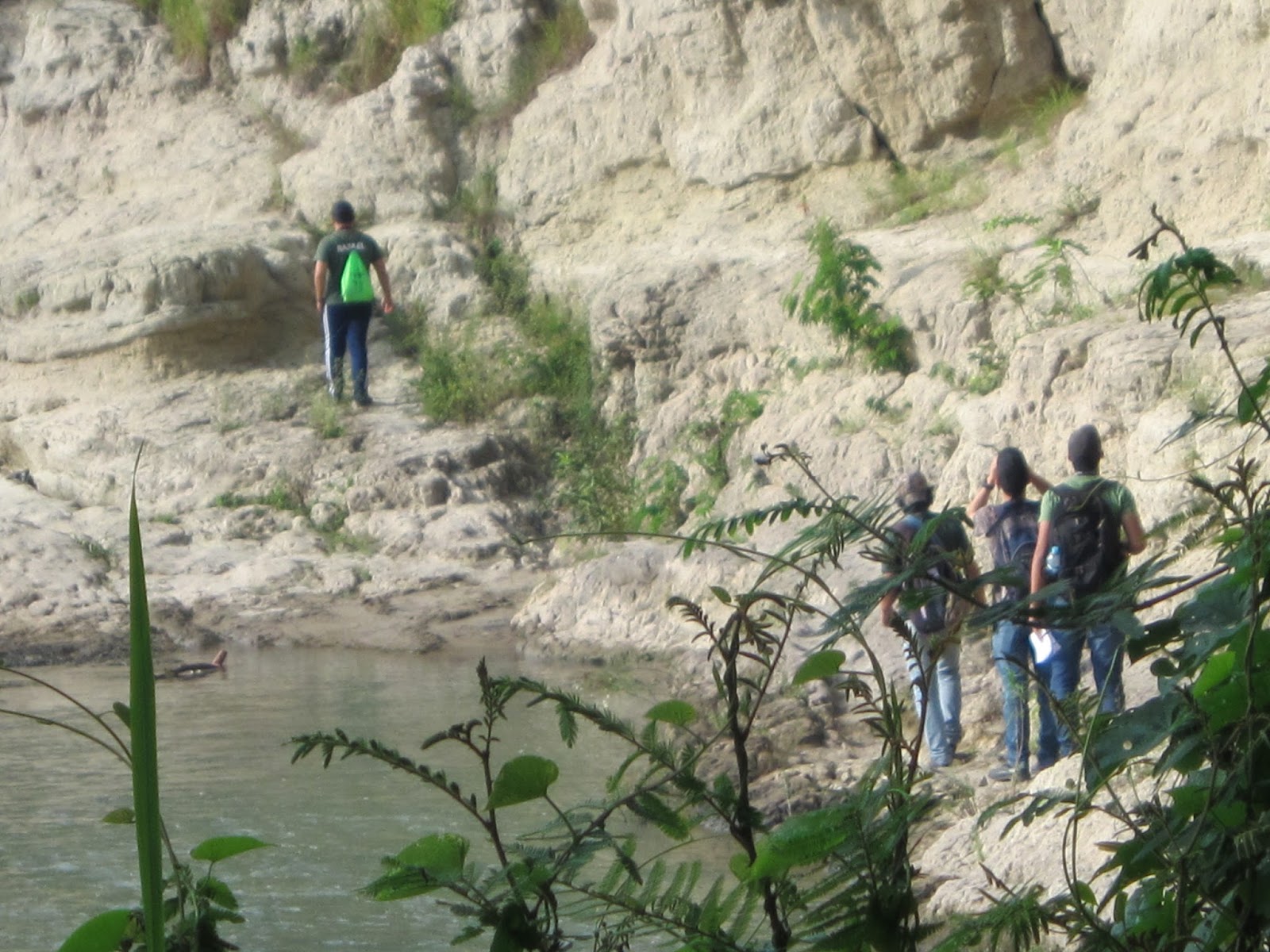
I attended an early morning field trip along the beautiful
Rio Grande on the outskirts of Gracias, Honduras with
members of Club Las Tanunas and Club Hummingbirds.
Photo credit: Jody Enck.
Post field trip coffee and breakfast with Club Las Tanunas and Club Hummingbirds.
Photo credit: Jody Enck.

               Members of Las Tanunas and the Hummingbirds (which were voted in as full members of Las Tanunas at that meeting!) expressed a great desire to be a sister birding club with the Cayuga Bird Club as a first step in developing a network of sister birding clubs between North and Central America!

               What might this relationship look like?  I asked the birders here what they thought a sister birding club relationship might entail, what Cayuga Bird Club members might learn from them, and what tangible benefits they would want from a relationship. Among a lot of ideas, these priorities emerged as desired outcomes for Club Las Tanunas:

·        Help promote Honduras as a safe and wonderful place for North Americans to come for birding.  They perceive that most North American birders either don’t think of Honduras as a birding destination or only see travel alerts from the State Department suggesting that Honduras is dangerous.

·        Help provide birding equipment, not for Club members,
Club Las Tanunas members engage school kids in bird and bird
conservation programming.  Photo credit: Club Las Tanunas.
but for Club members to use to engage other community members (e.g., school groups, the general public in the community, and visitors) in bird appreciation.
  Some of the other Clubs in the country have almost no equipment of their own (e.g., binoculars or field guides).  Las Tanunas is fortunate to be different in that they do have some personal or Club equipment.  And, they already put on school programs and bird-related workshops.  Additional binoculars and field guides could go a long way in facilitating the great community-based work they are doing in the Gracias area.

·        Help promote the Gracias area as a birding destination.  Despite its proximity to Celaque National Park (the highest peak in the country) and the occurrence of hard-to-find birds (like Honduran Emerald and Ocellated Quail), Gracias is not very near other, more well-known birding locations in Honduras.  None of the major eco-tourism lodges are located here, and externally-led tour groups generally don’t come here. 

·        Establish a sense of connection about what each sister club is doing on a regular basis.  For example, sister clubs could write a short column in the other club’s newsletter about what they’ve been up to in recent weeks.  We could share archived copies of club presentations, facebook posts, bird pictures and videos, and basic descriptions of what we are seeing (or not seeing) in the way of Neotropical migrant birds.

·        Our clubs also could write letters to the Mayors, Chambers of Commerce, or Tourism Bureaus in the city of the sister birding club to let them know that their local birding club is connected to another club along the Hemispheric Flyway of Neotropical migratory birds.  How much do the residents of Ithaca and Tompkins County in NY know about the Cayuga Bird Club, what we do, and why birds and bird conservation is so important to us?  Wouldn’t a letter from a sister bird club in Honduras give our Club some cache in Ithaca?

·        A delegation from the Cayuga Bird Club could travel to Gracias when they hold their own Birding Blitz next year.


Not surprisingly, members of Las Tanunas and the Cayuga Bird Club share a lot of experiences and attitudes about Neotropical migratory birds.  They told me that they get a little bored in the summer when the Neotropical migrants are breeding up in our part of the hemisphere.  Then, when the migrants return in the fall, it is more exciting again to go birding.  Just like we in Ithaca look forward to migration in the spring, birders here look forward to migration in the fall.   

Many of the club members I talked to try to go birding every day.  They were very happy to show me some of their favorite, near-by birding spots.  Late one afternoon, I went on a bird walk along the river in town with four members of Club Las Tanunas.  It was really fun as their English vocabulary mostly pertained to body parts of birds, and my Spanish vocabulary pertains mostly to ordering food in restaurants.  Nonetheless, we spoke the universal language of birders everywhere.  We pointed out birds to each other, identified them, got excited when we spotted five Wood Storks flying over (the only ones I’ve seen so far in Honduras), and we shared in the awe of seeing fascinating feathered creatures that link us in so many ways.

Members of Las Tanunas differ from the Cayuga Bird Club in some notable ways, however.  Most of Las Tanunas are young males.  They admit to being fairly competitive with each other, but not necessarily with birders outside of the club.  Most of these guys are not college educated, are either low-wage workers or are in between jobs.  Some of the other clubs are associated with colleges or larger towns, and members of those clubs typically have college degrees and somewhat higher paying jobs.  What Las Tanunas may lack in terms of material or financial resources, they more than make up for in terms of their camaraderie, birding excitement and expertise, and dedication to helping local community members better understand birds and threats to bird conservation. 
Luis Fajardo of Club Las Tanunas showing me his club t-shirt.
Photo credit: Jody Enck.

One of the things I enjoyed about my late afternoon walk with the four club members was how much their identity as birders was both central to their lives, and, also so well-accepted as normal by their friends in the community.  On our walk, we passed many of their friends – young men, often with longer hair and tattoos – who they greeted heartily with fist-bumps, hand-clasps, and bear hugs.  These non-birders sometimes asked, “are you looking for birds,” but this was almost more of a statement of fact, rather than a question.  Las Tanunas did not hide or camouflage their identity as birders, they just went about their lives as birders and their relatively macho friends (remember this is a macho, male-dominated society) accepted their identities as birders without batting an eyelash.

During our meeting on Saturday morning, one of their members (and adult mentor of Club Hummingbirds), Francisco Rovelo, translated for me.  Club president, Carlos Caballero, started out with a welcome and a statement of appreciation for all that ASHO has done to support the development and sustainability of their club (e.g., help developing their strategic plan, and help writing to other community institutions about the benefits Las Tanunas can bring to Gracias.   Carlos then shared a brief power point presentation about their club, it’s history, and what it strives to do (Cayuga Bird Club members – we should do this for our Club!). 
President of Club Las Tanunas, Carlos Caballero, presenting
information about the club.  Photo credit: Jody Enck.

I then had the opportunity to talk about the Cayuga Bird Club, and about this dream of establishing sister birding clubs between the U.S. and Honduras.  I didn’t need Francisco’s interpretation to sense how important and meaningful my visit was to Las Tanunas.  The importance of having somebody from outside of Honduras come and want to learn about their club and to experience what it means to be a bird club member from their point of view was really evident.  (I subsequently learned that this excitement and deep appreciation was continued among members of Las Tanunas on their Club Facebook page). 

By the end of this meeting, I was overwhelmed with positive emotions.  I felt appreciated and honored as a guest of Las Tanunas.  I also was filled with awe and appreciation for their dedication to birds, bird conservation, and to each other as birders.  We all shared in a deep desire to be part of something much bigger than just ourselves or our own clubs.  We want to be connected to this bigger group of people across the hemisphere, linked by the birds we all love so much.
Participants in our meeting about sister birding clubs included members of Club
Las Tanunas, members of Club Hummingbirds, Frony Miedema (far left) who is
owner of the Guancascos Hotel and Restaurant, ASHO board member William Orellana
(7th from right), and me (6th from right).  Photo credit: Guancascos Hotel and Restaurant.

Sharing this story on this blog or in presentations when I go back home cannot possible get across the rich and meaningful experiences I have had here.  I definitely want to come back to Honduras, and to bring others here to have these same kinds of experiences.  I feel more energized as a birder than I have felt in a very long time!