Showing posts with label Birds. Show all posts

Monday, November 21, 2016

A Simple Guy Enjoys Unimaginable Creature Comforts While Experiencing Nature


I think of myself as a relatively simple guy who doesn’t need a lot of creature comforts.  I grew up on a farm in southcentral Pennsylvania.  We lived in an old farm house that was built in the 1790s.  What it lacked in terms of comfort – no insulation to keep it warm in winter, heated by a woodstove in the dining room, and no indoor bathroom – it more than made up for in character and character-building opportunities for a kid with seven siblings. 

The only plumbing in the house was a kitchen sink.  In winter, we often had to carry water from that sink out to the barn where 50 thirsty steers didn’t care that the water line to the barn was frozen.  We had an outhouse – right up through the 1980s – that we affectionately called “the blue room.” 
My bathroom growing up on the farm- way too hot in the
summer and way too cold in winter.  Photo Credit:
One of the Enck Siblings.
In summer, our shower was a garden hose draped over the clothes line.  In winter, we bathed in a metal tub placed beside the dining room woodstove.  Saturday night bath time lasted for hours as each sibling took their turn. 

Considering that all my same-age friends were actually living in the 20th century while I was growing up in my own personal version of “Little House on the Prairie,” I learned that I didn’t need a lot modern comforts to thrive as a sibling in a big family, or as a human being in a fast-paced society.  Still, I recognized that experiencing some creature comforts can be a really good thing, too.  That was true when I was a kid, and it’s still true today.  I had a fantastic chance to learn that lesson again when I was in Honduras to start establishing a network of sister birding clubs between the U.S. and Honduras.

Honduras is a land of contrasts.  It has unbelievable natural beauty, landscapes, and wildlife.  It also is experiencing ever-increasing human pressures on habitats leading to serious threats to the sustainability of its awe-inspiring wildlife.  By many measures, Hondurans live in one of the poorest nations in the Western Hemisphere.  But, there also are major exceptions to that generality, including some amazing ecotourism infrastructure that can provide you with creature comforts well beyond your wildest dreams about what birding in paradise might be like.  During my time in Honduras, I was fortunate enough to have a couple of chances to experience birding in paradise at the Lodge and Spa at Pico Bonito.
Anyone used to the simple things in life can experience incredible sophistication at the Lodge and Spa at Pico Bonito.
The reception/lobby area at Pico Bonito.  Photo Credit: Lodge and Spa at Pico Bonito.  

          The Lodge and Spa at Pico Bonito is located in the rainforest of the north coast near the city of La Ceiba in Atlantida Department.  Its 400+ acre property abuts the unsurpassed Pico
Nightingale Wren -- one of the humid, evergreen forest birds
I only encountered while staying at Pico Bonito.
Photo Credit: David Rodriguez Arias.
Bonito National Park.
  About 420 bird species have been recorded on and near the Lodge property, including some of the most sought-after birds that can be found in Honduras.   I haven’t tallied all the bird species I saw while at the Lodge and surrounding areas, but it must be close to 200.  This includes many deep-forest species that I recorded nowhere else on my travels in Honduras. 

Miles of trails await anyone with a modicum of adventurous spirit.  Some trails are fairly easy walking, and one can access a wonderful, multi-story observation tower with a minimum of effort (only 5-10 minutes from the Lodge).  Other, longer trails require more effort, but the pay-off is well worth the effort.  Not too far from the Lodge, one can walk a trail along the top of a Rainforest-clad ridge where it is easy to imagine that humans have hiked this very ridge overlooking two watercourses for more than a thousand years.  Hikers can visit “Unbelievable Falls” and other
Those willing to hike a bit can be rewarded with a swim below
"Unbelievable Fall".  Photo Credit: Lodge and Spa at Pico Bonito.
unbelievable sights on the property.
  The steep slopes and imposing presence of namesake Pico Bonito add to the amazing natural beauty of the landscape.

Obviously, birds are not the only denizens of the Rainforest here.  This area provides important habitat for an incredible diversity of mammalian species, from the ever-present Central American Agouti, to Kinkajous, Coatis, at least three species of Monkeys (which I saw frequently), and several species of feline predators.  Trail cams showing pictures on a screen in the lobby
An Ocelot prowls the forest at Pico Bonito.  Photo Credit:
James Adams and the Lodge and Spa at Pico Bonito. 
area of the Lodge provide evidence that the property has suitable habitat for Jaguar, Puma, Ocelot, Jaguarondi, Margay, and more.
  The diversity of butterflies, moths, and other insects will stun any insect-loving visitor.  If you are lucky, you also can encounter many species of frogs and toads, as well as an assortment of lizards and snakes.

OK, so the wildlife, habitats, and landscapes, and the experiences you can have in them are world-class.  What about the facility itself?  Fear not.  If you want to experience unimaginable creature comforts, total relaxation, and have friendly staff want to attend to all your interests, then the Lodge and Spa at Pico Bonito is for you.

The first thing you will notice upon arrival is the beautiful, open-air reception/lobby building and several knowledgeable,
Walkway connecting the Reception/Lobby are to the
Restaurant.  Photo Credit: Lodge and Spa at Pico Bonito.
friendly staff waiting to check you in and provide you with a great experience from your first minute on-site.
  There is an array of luxuriously appointed cabins, each with private bathroom, awaiting your visit.  The restaurant serves a wide variety of
Outdoor and indoor options are available at the restaurant.
Photo Credit: Lodge and Spa at Pico Bonito.
wonderful dishes, including fresh salads, various steak, seafood, and vegetarian dishes.
  The desert menu is as wonderful as you’d expect after a meal fit for royalty.  All of that is topped off by a staff whose main raison d’etre seems to be to please you. 

View of a "Standard Cabin" at Pico Bonito.  Photo-credit: Lodge and Spa
at Pico Bonito.

For those who are looking for an opportunity to relax and unwind, you can take advantage of the full-service spa.  If you want some pampering, you can find it on the Spa menu.  Massage,
Quiet relaxation in the Spa surrounded by humid, evergreen
forest.  Photo Credit: Lodge and Spa at Pico Bonito.
aromatherapy, yoga, and more are available.
  Visitors who want to experience some nature without having to hike much to find it can make an appointment to visit both the Butterfly House and the Serpentarium.  Despite spending a fairly extensive amount of time in the field while there, the only place I saw any venomous snakes was in their glass-encased habitats in the Serpentarium. 
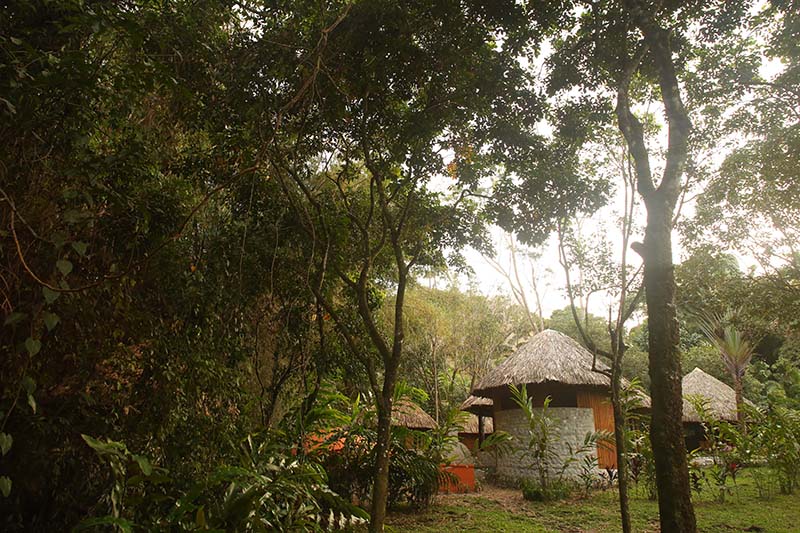
One can relax with Yoga surrounded by nature.
Photo credit: Jody Enck.

The Lodge has available a number of great, local guides who can lead you around the grounds and on the trail
s to observe birds and other wildlife.  They also can help you sign up for some adventures farther afield, including day trips to nearby mangrove wetlands, Botanical Gardens, dry forest where you can see Honduras’ only endemic bird – the Honduran Emerald (hummingbird), and more.  You also can sign up for multiple-day adventures, including white-water rafting and snorkeling. 

I was impressed every day during my visits to Pico Bonito by the commitment of the staff to ensure my visit was as wonderful as possible.  Like I said at the beginning of this post, I think of myself as a relatively simple guy who does not need to experience creature comforts to have a great time.  But, being provided with unexpected creature comforts while in a tropical Rainforest landscape provided me with an experience I will never forget.

Friday, November 18, 2016

Honduras by the numbers -- Part I

          Readers of this blog will know that I just returned from almost five weeks in Honduras.  One of my main reasons for going was to meet with bird clubs there to explore the idea of developing a network of sister bird clubs between North America and Central America.  That part of my trip was a rousing success as I have reported previously. 
A reunion of sorts took place on 6 November at Pico Bonito
Lodge.  Two of my new friends from bird clubs in Honduras,
Hector Moncada (on left, from San Pedro Sula) and
Francisco Rovelo (on right, from Gracias), were there
participating in an education workshop put on by BirdSlueth
International (from Cornell University) and I was participating
in the Honduras Birding for Conservation Tour.
Photo Credit: Jody Enck.
          The two other successful aspects of my trip were to participate in the Lake Yojoa Birding Blitz in mid October and to also participate in the Honduras Birding for Conservation Tour during the first half of November.  If making a couple dozen new friends and seeing hundreds of species of birds equals success, then I had the grandest of successful times!

          Upon reading some of my earlier blog posts in late October, one of my new friends from Zamorano University noticed that I wrote a lot more about the people I was meeting and experiences I was having than about the birds I was seeing.  This post is to "correct" that deficiency.  All the bird species in photos below are species that I saw.

          One can find about 765 species of birds in Honduras assuming you have the time and wherewithal to scour every corner of this geographically and ecologically diverse country and have lots on luck on your side.  One of these bird species, a beautiful

little hummingbird called the Honduran Emerald, is found nowhere
Honduras' only endemic bird species: the Honduran Emerald.
Photo Credit: Beaks and Peaks Adventure and Birding Tours.
else on Earth except in Honduras.  Another 75 of so species are resident rainforest birds that you can find only in the largely inaccessible eastern reaches of Honduras called Mosquitia -- or farther south in Central America.  Of the 765 bird species one can encounter in Honduras, only about 140 or so (excluding seabirds) are our North American "Birds of Summer" -- Neotropical migratory birds that breed up in North America and winter in, or migrate through, Honduras.


          According to my records, I ended up seeing/hearing 387 species of birds in Honduras -- almost exactly half of the birds that occur in the entire country.  Of these, 174 were Life Birds for me.  (For non-birders, a Life Bird is a species that you have never seen/heard before in your life).  This means that about 45% of the species I encountered in Honduras were completely new to me.  That's a great trip!

          Below is a breakdown of what I encountered.  These numbers are not exact (in terms of the numbers of migrants vs. resident birds, etc.).  I provide approximations just to give you a sense of what I encountered.

Tinamous
4 species occur in Honduras.  
Great Tinamou for those of you who don't know what
a Tinamou is.  Photo Credit: Wikipedia.  
All species are residents (not Neotropical migrants).  I saw/heard 2 of the 4 species, and both were Life Birds for me. 


Ducks and Geese
About 15 species occur in Honduras, and 8 or so of these are migrants that also occur in North America.  I saw 6 species of ducks and 4 were migrants. 

Chachalacas, Curassow, Guans
6 resident species occur.  I only encountered one: Plain Chachalaca.

New World Quails Partridges
The mythical Ocellated Quail.  Photo Credit: Beaks and Peaks
Adventure and Birding Tours.

8 resident species occur.  I was lucky enough to see/hear 4 species, all of which were life birds for me.

Grebes
2 resident species occur.  I saw Pied-billed Grebe (yes, these birds migrate south from New York State for the winter, but the subspecies in Honduras is a resident one).

Shearwaters, Storm-Petrels, Tropicbirds, Frigatebirds
About 10-12 of these ocean-living birds have been recorded in Honduras.  The Magnificent Frigatebirds I encountered were a new Life Bird Species for me.  

American Flamingo, Jabiru, Wood Stork 
Of these 3 mostly resident species, I encountered Wood Storks.

Boobies, Cormorants, Anhinga, Pelicans
8 of these species can be found in Honduras.  Although some show some seasonal patterns of occurrence, none are Neotropical migrants.  I saw 3 of these species.

Herons, Egrets, Bitterns, Ibises, Spoonbill
23 species occur in Honduras.  None of the 13 species I saw are Neotropical migrants although some do migrate short distances.

Vultures, Hawks, and Eagles
White-breasted Hawk -- a Central American subspecies
of our more familiar Sharp-shinned Hawk. 
Photo Credit: Jody Enck.


A whopping 39 species occur in Honduras, and about a dozen show seasonal occurrence.  Still, only about 5 are truly Neotropical migrants breeding in North America and wintering in Honduras or farther south.  I saw 21 species, including Cooper's Hawk and Broad-winged Hawk which are Neotropical migrants. 
King Vulture, a truly remarkable bird.  Photo. Credit: Beaks
and Peaks Adventure and Birding Tours.
I also was fortunate to see all 4 species of vulture that occur in Honduras: Black, Turkey, Lesser Yellow-headed, and King.


Rails, Crakes, Gallinules, Coots, Sunbittern, Sungrebe, and Limpkin
About 16 species can be found in Honduras, with American Coot ad Sora (a rail) being migrants.  I saw/heard 10 of those.  I missed out on a "big one," though.  I was in a boat in the mangroves of Cuerro y Salado Wildlife Refuge from which several people spotted a
Two Rufous-necked Wood-Rails in front being photo-bombed
by a Russet-necked Wood-Rail (right in the center of the
photo, heading right).  Photo Credit: Jeff Gordon.
Rufous-necked Wood-Rail photo-bombing 2 Russet-naped Wood-Rails.  I was so fixated on the Russet-naped pair that I only got a quick glimpse of the Rufous-necked species running behind the other 2 birds.  Luckily, our leader, Jeff Gordon, President of the American Birding Association, got a picture!  Although I could not count it on my life list, our team got to count it on the team list.  The photo provided the first documented evidence of this species for the Department of Atlántida in Honduras.  I did see the bird running behind the other two in front, but did not get a good look at it.


Shorebirds: Sandpipers, Plovers, and allies
40 species occur in Honduras, and about 15 of these are migrants that winter in Honduras.  I saw 14 of the 40 species of shorebirds.

Gulls and Terns
26 of these species have been reported in Honduras, and none of those are what you would call Neotropical migrants.  Indeed, with the exception of Laughing Gull, most gull species occur as uncommon visitors.  The tropics are more about Terns than Gulls.
I saw Laughing Gull, Royal Tern, and Sandwich Tern.

Doves and Pigeons
22 species occur in Honduras, with Mourning Dove being the only true migrant.  I was fortunate to see 14 species, but I did not see a Mourning Dove!

Cuckoos, Lesser Roadrunner, and Anis
11 species occur, with 3 or 4 being migrants, including our familiar Yellow-billed Cuckoo and Black-billed Cuckoo.  I saw 6 species, including the Neotropical migrant Yellow-billed Cuckoo.

Owls
16 species of owls can be found in Honduras if you are willing to explore the wilds in the dark and have lots of luck on your side.  I was lucky enough to encounter 4 species of owl.


Great Potoo, a really amazing and somewhat strange bird.
Photo credit: Bill Thompson III.
Nightjars and Potoos
8 species of Nightjar and 2 species of Potoo occur.  I saw 2 species of Nightjars and had great looks at multiple Great Potoos.


Swifts
For those of us in the northeastern U.S. where we can encounter only Chimney Swift, the 10 species of Swift in Honduras make it well worthwhile to check out every flock you see.  I was lucky enough to spot half of the species that are possible to see.

Hummingbirds
There are 42 or 43 species of Hummingbirds in Honduras, apparently including Buff-bellied Hummingbird which was
Even in the rain, this Crowned Woodnymph shows off its
spectacular colors.  Photo credit: John van Dort and
Macauley Library 37692311.
photographed for the very first time in Honduras during the 2016 Honduras Birding for Conservation Tour.  Of all of these Hummingbirds, 5 or 6 exhibit seasonal occurrence, and one (Ruby-throated Hummingbird) is a true Neotropical migrant.  When I counted up the Hummingbird species I saw, I was astounded to note that I saw 25 species!  And, yes, I did see several Ruby-throated Hummingbirds.  Maybe one of those spent the summer in my local patch in New York State.

Black-headed Trogon.  Photo Credit:
Bill Thompson III.
Resplendent Quetzal and Trogons
In addition to the Quetzal, 7 species of Trogon occur.  I was fortunate enough to see a pair of Quetzals and 4 species of Trogon.


Motmots
Turquoise-browed Motmot.  Photo Credit: Jody Enck.

7 species can be found in Honduras.  I enjoyed seeing 3 of those species.  Even with my little point and shoot camera, I was able to get decent pictures of both Lesson's Motmot and Turquoise-browed Motmot.


Kingfishers, Puffbirds, and Jacamars
6 species of Kingfisher, including the migratory Belted Kingfisher, occur in Honduras along with 3 species of Puffbirds and 2 Jacamar species.  I was lucky to see 5 species of Kingfisher, including Belted and the really tiny American Pygmy-Kingfisher.  I missed out on the Puffbirds, but did encounter Rufous-tailed Jacamars.

Toucans, Emerald Toucanet, and Collared Aracari
5 species can be found in Honduras.  These are among the most iconic species of the Rainforest and similar habitats.  I encountered 3 of these species on multiple occasions. 

A pair of Olivaceous Piculets, the smallest woodpeckers in the
hemisphere.  Photo Credit: Beaks and Peaks Adventure and
Birding Tours.
Woodpeckers
16 species occur, including the migratory Yellow-bellied Sapsucker.  Woodpeckers are among my most favorite bird species because their behavior makes them some of the easiest species to study for long periods of time.  I saw 11 species, including Yellow-bellied Sapsucker and Olivaceous Piculet.
Falcons
13 species of Falcon can be spotted in Honduras, including the migratory Merlin and Peregrine.  I saw/heard (yes, several Falcon species are easily identifiable by voice) 7 species, including both migrant species.  My favorite to both see and hear probably was Laughing Falcon.  The most amazing Falcon-related experience I had was watching a Bat Falcon pluck and eat a female Three-wattled Bellbird near the Pico Bonito Lodge.  Although not countable on my Life List, the Bellbird was the first of its species recorded from the Department of Atlántida in Honduras.

Parrots, Parakeets, and Macaws
White-fronted Parrots, named for the white on their foreheads.
Photo Credit: Beaks and Peaks Adventure and Birding Tours.
17 species of this noisy and beautiful group of birds occur in Honduras.  I saw 7 species, including Scarlet Macaws from a restored, free-flying population near the Copan ruins in western Honduras.

I will cover the rest of the birds I saw in Honduras in a second post on this subject.


Sunday, October 30, 2016

A Big Step Toward Establishing Sister Birding Clubs Between the U.S. and Honduras


               A couple months ago, I had a small dream of trying to link my local bird club in Ithaca, NY (the Cayuga Bird Club) with a club or two in Honduras based on the idea that we share an interest in some of the same birds.  From about May through September, those of us in the Ithaca area enjoy a large diversity of warblers, vireos, flycatchers, cardinal-tanagers, and other Neotropical migrants which breed in North America.  The rest of the year, those migrants travel to, and winter in, areas much farther south.  Honduras is the winter destination for many of those migrants, and many others pass through Honduras on their way even further south for the winter.
Rose-breasted Grosbeaks on just one of dozens of species of
Neotropical migratory birds that link birders in North and
Central America.  Photo Credit: Gary Tyson.


               I already had planned to travel to Honduras to participate in the Honduras Birding for Conservation Tour in early November when I had that dream.  I was very fortunate to have an opportunity to travel to Honduras even earlier – in mid-October – to meet with bird clubs, and to experience an immersion into the birding culture of Honduras prior to participating in the Conservation Tour.  The dream I imagined was small and simple.  Little did I know what amazing reality was possible!

               This week, we took a huge step in bringing that dream to reality!  On Friday and Saturday, I was in the western Honduras town of Gracias to meet with members of Club Las Tanunas (the Lesser Roadrunners) and a school-based group called Club Hummingbirds.  Members of these clubs invited me to go birding with them, to share meals and drinks, to see a slide presentation about their clubs and what they do, and to experience a club meeting at which we discussed the sister birding club idea.  Now, 24 hours later, I am still amazed at what happened in that meeting. 
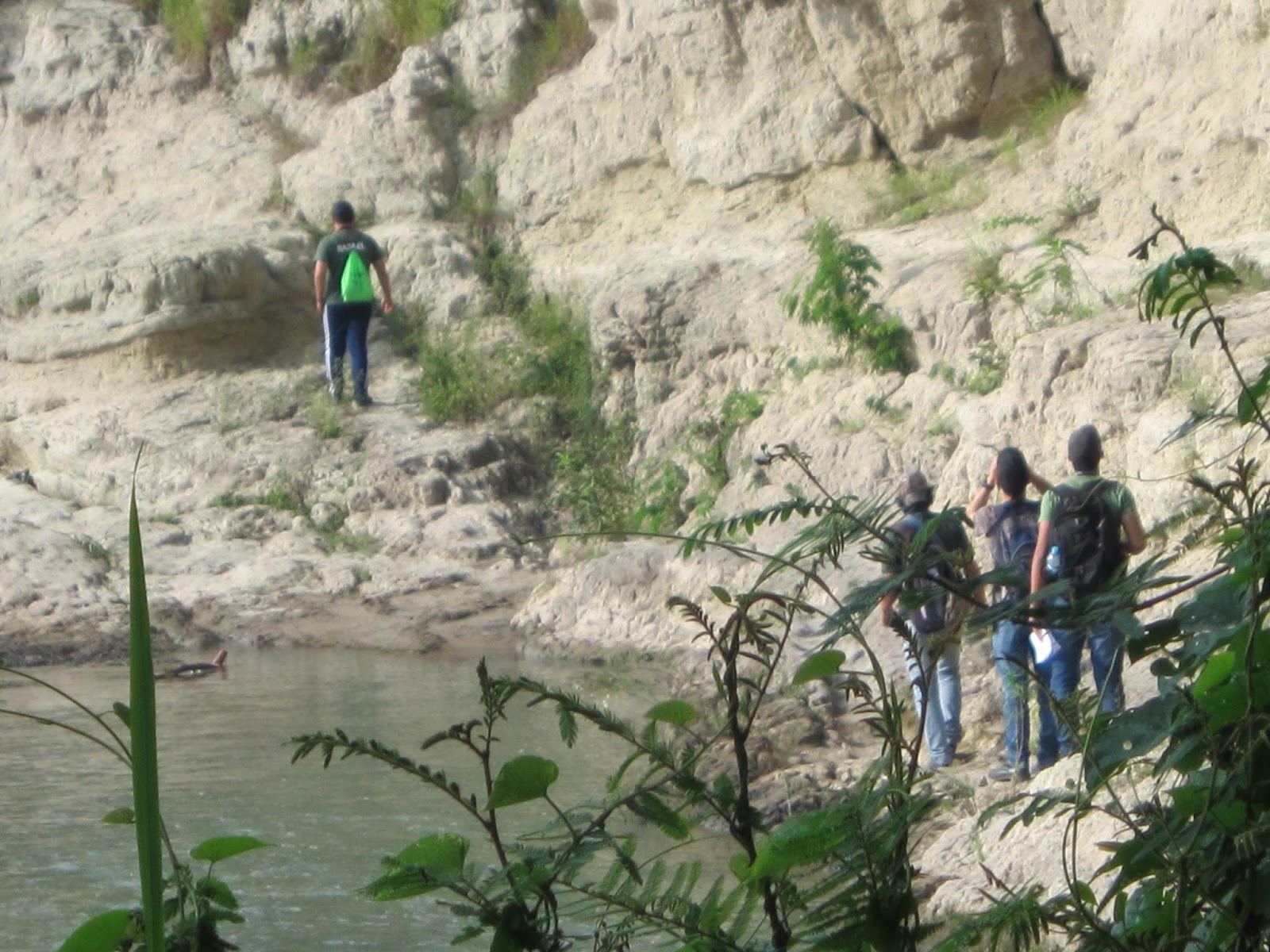
I attended an early morning field trip along the beautiful
Rio Grande on the outskirts of Gracias, Honduras with
members of Club Las Tanunas and Club Hummingbirds.
Photo credit: Jody Enck.
Post field trip coffee and breakfast with Club Las Tanunas and Club Hummingbirds.
Photo credit: Jody Enck.

               Members of Las Tanunas and the Hummingbirds (which were voted in as full members of Las Tanunas at that meeting!) expressed a great desire to be a sister birding club with the Cayuga Bird Club as a first step in developing a network of sister birding clubs between North and Central America!

               What might this relationship look like?  I asked the birders here what they thought a sister birding club relationship might entail, what Cayuga Bird Club members might learn from them, and what tangible benefits they would want from a relationship. Among a lot of ideas, these priorities emerged as desired outcomes for Club Las Tanunas:

·        Help promote Honduras as a safe and wonderful place for North Americans to come for birding.  They perceive that most North American birders either don’t think of Honduras as a birding destination or only see travel alerts from the State Department suggesting that Honduras is dangerous.

·        Help provide birding equipment, not for Club members,
Club Las Tanunas members engage school kids in bird and bird
conservation programming.  Photo credit: Club Las Tanunas.
but for Club members to use to engage other community members (e.g., school groups, the general public in the community, and visitors) in bird appreciation.
  Some of the other Clubs in the country have almost no equipment of their own (e.g., binoculars or field guides).  Las Tanunas is fortunate to be different in that they do have some personal or Club equipment.  And, they already put on school programs and bird-related workshops.  Additional binoculars and field guides could go a long way in facilitating the great community-based work they are doing in the Gracias area.

·        Help promote the Gracias area as a birding destination.  Despite its proximity to Celaque National Park (the highest peak in the country) and the occurrence of hard-to-find birds (like Honduran Emerald and Ocellated Quail), Gracias is not very near other, more well-known birding locations in Honduras.  None of the major eco-tourism lodges are located here, and externally-led tour groups generally don’t come here. 

·        Establish a sense of connection about what each sister club is doing on a regular basis.  For example, sister clubs could write a short column in the other club’s newsletter about what they’ve been up to in recent weeks.  We could share archived copies of club presentations, facebook posts, bird pictures and videos, and basic descriptions of what we are seeing (or not seeing) in the way of Neotropical migrant birds.

·        Our clubs also could write letters to the Mayors, Chambers of Commerce, or Tourism Bureaus in the city of the sister birding club to let them know that their local birding club is connected to another club along the Hemispheric Flyway of Neotropical migratory birds.  How much do the residents of Ithaca and Tompkins County in NY know about the Cayuga Bird Club, what we do, and why birds and bird conservation is so important to us?  Wouldn’t a letter from a sister bird club in Honduras give our Club some cache in Ithaca?

·        A delegation from the Cayuga Bird Club could travel to Gracias when they hold their own Birding Blitz next year.


Not surprisingly, members of Las Tanunas and the Cayuga Bird Club share a lot of experiences and attitudes about Neotropical migratory birds.  They told me that they get a little bored in the summer when the Neotropical migrants are breeding up in our part of the hemisphere.  Then, when the migrants return in the fall, it is more exciting again to go birding.  Just like we in Ithaca look forward to migration in the spring, birders here look forward to migration in the fall.   

Many of the club members I talked to try to go birding every day.  They were very happy to show me some of their favorite, near-by birding spots.  Late one afternoon, I went on a bird walk along the river in town with four members of Club Las Tanunas.  It was really fun as their English vocabulary mostly pertained to body parts of birds, and my Spanish vocabulary pertains mostly to ordering food in restaurants.  Nonetheless, we spoke the universal language of birders everywhere.  We pointed out birds to each other, identified them, got excited when we spotted five Wood Storks flying over (the only ones I’ve seen so far in Honduras), and we shared in the awe of seeing fascinating feathered creatures that link us in so many ways.

Members of Las Tanunas differ from the Cayuga Bird Club in some notable ways, however.  Most of Las Tanunas are young males.  They admit to being fairly competitive with each other, but not necessarily with birders outside of the club.  Most of these guys are not college educated, are either low-wage workers or are in between jobs.  Some of the other clubs are associated with colleges or larger towns, and members of those clubs typically have college degrees and somewhat higher paying jobs.  What Las Tanunas may lack in terms of material or financial resources, they more than make up for in terms of their camaraderie, birding excitement and expertise, and dedication to helping local community members better understand birds and threats to bird conservation. 
Luis Fajardo of Club Las Tanunas showing me his club t-shirt.
Photo credit: Jody Enck.

One of the things I enjoyed about my late afternoon walk with the four club members was how much their identity as birders was both central to their lives, and, also so well-accepted as normal by their friends in the community.  On our walk, we passed many of their friends – young men, often with longer hair and tattoos – who they greeted heartily with fist-bumps, hand-clasps, and bear hugs.  These non-birders sometimes asked, “are you looking for birds,” but this was almost more of a statement of fact, rather than a question.  Las Tanunas did not hide or camouflage their identity as birders, they just went about their lives as birders and their relatively macho friends (remember this is a macho, male-dominated society) accepted their identities as birders without batting an eyelash.

During our meeting on Saturday morning, one of their members (and adult mentor of Club Hummingbirds), Francisco Rovelo, translated for me.  Club president, Carlos Caballero, started out with a welcome and a statement of appreciation for all that ASHO has done to support the development and sustainability of their club (e.g., help developing their strategic plan, and help writing to other community institutions about the benefits Las Tanunas can bring to Gracias.   Carlos then shared a brief power point presentation about their club, it’s history, and what it strives to do (Cayuga Bird Club members – we should do this for our Club!). 
President of Club Las Tanunas, Carlos Caballero, presenting
information about the club.  Photo credit: Jody Enck.

I then had the opportunity to talk about the Cayuga Bird Club, and about this dream of establishing sister birding clubs between the U.S. and Honduras.  I didn’t need Francisco’s interpretation to sense how important and meaningful my visit was to Las Tanunas.  The importance of having somebody from outside of Honduras come and want to learn about their club and to experience what it means to be a bird club member from their point of view was really evident.  (I subsequently learned that this excitement and deep appreciation was continued among members of Las Tanunas on their Club Facebook page). 

By the end of this meeting, I was overwhelmed with positive emotions.  I felt appreciated and honored as a guest of Las Tanunas.  I also was filled with awe and appreciation for their dedication to birds, bird conservation, and to each other as birders.  We all shared in a deep desire to be part of something much bigger than just ourselves or our own clubs.  We want to be connected to this bigger group of people across the hemisphere, linked by the birds we all love so much.
Participants in our meeting about sister birding clubs included members of Club
Las Tanunas, members of Club Hummingbirds, Frony Miedema (far left) who is
owner of the Guancascos Hotel and Restaurant, ASHO board member William Orellana
(7th from right), and me (6th from right).  Photo credit: Guancascos Hotel and Restaurant.

Sharing this story on this blog or in presentations when I go back home cannot possible get across the rich and meaningful experiences I have had here.  I definitely want to come back to Honduras, and to bring others here to have these same kinds of experiences.  I feel more energized as a birder than I have felt in a very long time!


Thursday, October 27, 2016

Interacting with Students and Faculty at Zamorano University through Birds


Last night, I had the privilege of giving a guest lecture to the Biodiversity Club at Zamorano University about an hour south of Tegucigalpa, Honduras.  I spoke about the “Human Dimensions of Natural Resource Management.”  My basic message was that managing natural resources requires an integration of information and actions pertaining to wildlife, habitat, and people.  About 25 students, faculty, and staff attended.  The lecture was more of a rolling discussion stimulated by slides I put together from lectures I’ve given back at Cornell and modified to include issues from Honduras.
After my evening lecture/discussion, I was honored to get this photo with one of the
Assistant Professors (left) and two students.  Note the Syracuse University sweatshirt
worn by one of the students.  I almost felt like I was back home in central New York.
Photo credit: Oliver Komar.


               We didn’t talk only about birds, but bird conservation was certainly a major topic of discussion.  For example, we talked about the situation pertaining to protected areas here in Honduras – particularly National Parks.  There are about 17 National Parks in Honduras.  Each of them has a core area of protection – often at the highest elevations, in an effort to ensure protection of water sources for the many communities that surround the parks.  And by surround, I mean communities that exist within the so-called “buffer zones” of the national parks.  The buffer zones include areas that certainly deserve protection, but often heavily disturbed by human development (both for agriculture and for human habitation).  See the accompanying picture of the map for an example.
A map of Azul Meambar National Park (total area encompassed in yellow and green). 
The green represents the core area that is the highest elevation and which is supposed
to be off-limits to human development.  The yellow shows the buffer zone -- a protected
part of the National Park, but an area containing many small communities and which
is heavily disturbed by human development.  Photo credit: Jody Enck.  

               The communities that exist within the buffer zones not only impact the wildlife and habitat within that buffer zone, but sometimes (perhaps usually), encroach on the core protected area.  You can see examples of clearing on slopes for planning of corn, coffee, beans, bananas, or other crops, and for livestock pasturing.  Human habitation follows as local residents build structures to stay in while working in the encroached fields. 

               Developmental pressures and subsistence needs are great.  The situation is likely to only get worse as human population increases.  The students who attended my discussion pointed out to me that it is not only the responsibility of the government to protect biodiversity within these protected areas.  It also is the responsibility of people who live in these communities within the buffer zones.  One challenge is that most of those residents have no idea about the biodiversity that exists in these areas, why that biodiversity is important to them and to others, or about how their actions negatively affects that biodiversity.

               This point was driven home to me this morning as I accompanied a class from Zamorano University to the Finca Agroecologica Santa Inez.  A sustainable agro-forestry area owned and managed by the university on the slopes above the main campus, which is down in the valley.  Every day during the trimester, students spend half a day in classes and half in a learning-by-doing module that includes a lot of hands-on activities.  One week, the classes are in the morning and learning-by-doing in the afternoon.  Then the next week the schedule flips and learning-by-doing is in the morning. 
Students in a learning-by-doing module conducting an eBird transect count
in the Finca Agroecologica at Zamorano University.  Photo credit: Jody Enck.


               This morning, 11 students from an agro-ecology class conducted a bird census along a transect in the Finca Agroecologica.  Most of these students were not birders or naturalists of any type – fairly representative of the broader population in that sense.  When asked how many bird species we might see on our transect (of a couple kilometers), responses ranged from 8 to 20.  We saw and/or heard 48 species.  The point driven home to me was that even these ecology students are relatively unaware of the biodiversity right here in the campus area.  Of course, as ecology students, their discussion of the morning’s activity focused their attention on the need to help others, especially those living in and adjacent to protected areas, to become aware of the biodiversity around them, the importance of it, and the threats to that biodiversity that exist because of human development.
The entire class of friendly and engaging ecology students who I got to
accompany while they participated in a learning-by-doing model in the
Finca Agroecologica Santa Inez  at Zamorano University. 
Photo Credit: Oliver Komar.


               It is not just a matter of putting a line on a map around a biodiverse area and saying that people have to stay out.  There needs to be some tangible value back to the local residents from that biodiversity.  When eco-tourists come and visit these areas and hire local guides, eat in local restaurants, and stay in local hotels, the local residents can become more aware that maintaining biodiversity is one way to attract economic benefit to the local area.  That is why one important aspect of establishing sister birding clubs likely will be to encourage and facilitate visits by northerners to these areas.